
BYOK vs Managed AI Keys: Which Is Right for You?
The transition of artificial intelligence from experimental prototypes to enterprise-grade production environments introduces some serious architectural challenges. As large language models (LLMs) become embedded into mission-critical workflows, the way you authenticate, authorize, and meter interactions with these models shapes both security posture and financial viability.
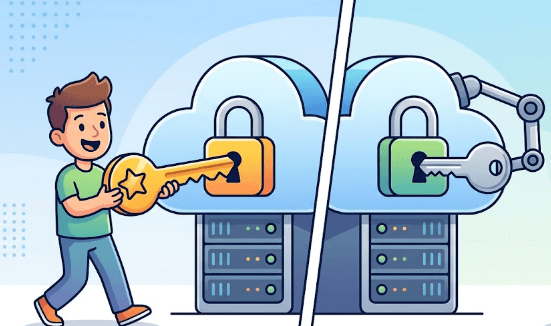
The central decision facing infrastructure teams comes down to credential governance: do you go with a Bring Your Own Key (BYOK) approach, or rely on managed AI keys provided by a third-party platform?
Getting this right requires understanding how BYOK vs managed AI keys impact operational resilience. You need to weigh their respective benefits, operational drawbacks, and real-world implications - especially within regulated industries. The integration of these key management strategies within centralized AI gateways also highlights advanced threat landscapes, from prompt injection to data poisoning, that demand robust credential architectures.
Link to section: BYOK vs Managed AI Keys: The Enterprise DilemmaBYOK vs Managed AI Keys: The Enterprise Dilemma
To understand the implications of key management in generative AI, it helps to distinguish between the two primary mechanisms of cryptographic and API control: Bring Your Own Key (BYOK) and Managed Keys. BYOK within the AI ecosystem actually encompasses two distinct technical capabilities that deserve separate evaluation.
Link to section: Understanding Bring Your Own Key (BYOK)Understanding Bring Your Own Key (BYOK)
In a BYOK architecture, the enterprise customer provides its own cryptographic or API credentials to a third-party application, SaaS provider, or AI gateway. This model fundamentally decouples the consumption of the software service from the underlying token generation costs.
The first capability is API Key BYOK. Here, the customer inputs their proprietary API key (such as an OpenAI, Anthropic, or Google Cloud credential) directly into the SaaS application or gateway platform. The application encrypts and stores this key within a secure vault, associating it exclusively with that customer's account. When the application needs an LLM generation, it retrieves the specific key and makes API calls to the provider on the customer's behalf. The foundational model provider bills the customer directly for token usage, while the software vendor charges a separate fee for platform access or value-added features. This preserves direct provider billing, logging, and contractual agreements under the enterprise account.
The second capability is Encryption Key BYOK, often called Customer Managed Keys (CMK). In this scenario, the enterprise retains absolute control over the master encryption keys used to protect data at rest within the cloud provider or AI platform's environment. These keys reside in a highly secure system controlled entirely by the customer, such as an on-premises Hardware Security Module (HSM) or an external Key Management Service (KMS) deployed in a separate environment. The cloud provider must programmatically call back to the customer's KMS for any cryptographic operations. If the enterprise revokes access, the provider simply cannot decrypt the data - providing real technical control rather than just a contractual promise.
Link to section: The Mechanics of Managed AI KeysThe Mechanics of Managed AI Keys
The Managed Key architecture operates on a reseller abstraction model. The software vendor, AI gateway, or SaaS provider abstracts the LLM API keys entirely from the end-user. The platform maintains its own enterprise agreements and API keys with foundational model providers, routing all multi-tenant customer traffic through centralized, aggregated credentials.
Under this model, the customer never needs to configure provider accounts, manage billing relationships with entities like OpenAI, or secure sensitive API secrets. The platform aggregates token usage internally and bills the customer directly. This billing model typically incorporates a significant markup on raw token costs or bundles inference expenses into a broader subscription fee. While this provides a frictionless onboarding experience, it obscures the underlying infrastructure and introduces notable economic inefficiencies for high-volume enterprise deployments.
Link to section: Economic Implications: Cost Control and Double TaxationEconomic Implications: Cost Control and Double Taxation
The financial implications of choosing between BYOK and managed keys are substantial, influencing both the predictability of operational expenditures and the ability to scale AI applications efficiently.
Link to section: The Hidden Costs of Managed Key ArchitecturesThe Hidden Costs of Managed Key Architectures
Platforms using managed keys frequently present a simplified billing experience, but this convenience masks a financial penalty often called "double taxation." When a SaaS application embeds LLM access and manages the underlying keys, the vendor must absorb the highly variable costs of generative AI compute. To protect their margins from heavy utilization, vendors often implement premium subscription tiers, rigid usage caps, or substantial markups on token consumption.
Tokens are the fundamental building blocks of AI text processing. A token can represent a single character or a full word, depending on the model's tokenizer. Providers charge based on both input tokens (the prompt) and output tokens (the generation). If an enterprise uses multiple AI-powered applications - say, an AI coding assistant, an automated customer support chatbot, and a financial forecasting tool - and each runs on a managed key model, the enterprise effectively pays a premium markup for the exact same underlying compute across multiple vendors. This fragmentation results in redundant spending, unpredictable overage fees, and completely obscured true costs of enterprise-wide AI consumption.
Link to section: Financial Transparency and Enterprise DiscountsFinancial Transparency and Enterprise Discounts
BYOK architectures separate software costs from the variable cost of AI compute, creating a highly transparent financial model. This structural separation offers several secondary financial advantages for enterprise procurement teams.
Large enterprises frequently negotiate bulk discount agreements directly with cloud providers, such as Microsoft Enterprise Agreements for Azure OpenAI or committed use discounts with Google Cloud. BYOK allows organizations to route all third-party SaaS traffic through their proprietary, discounted API keys, maximizing the return on negotiated compute contracts. Usage through BYOK is billed directly by the chosen provider and doesn't count against the software vendor's usage quotas, letting teams leverage existing credits seamlessly.
By funneling all API requests through owned keys, finance and FinOps teams also gain the ability to monitor token usage and implement internal chargeback models across departments with granular precision. From the application developer's perspective, supporting BYOK eliminates the financial risk of user base scaling. The vendor is no longer responsible for funding the user's API consumption, allowing them to offer more predictable, lower-cost subscription models for their core software.
Link to section: Intelligent Routing and Optimization StrategiesIntelligent Routing and Optimization Strategies
Modern enterprise architectures increasingly rely on AI gateways that sit between applications and model providers. When combined with BYOK, these centralized gateways introduce sophisticated cost-optimization mechanics that are impossible to implement in fragmented managed key environments.
Through intelligent load balancing, gateways dynamically route requests based on real-time token costs, network latency, or rate limits. For example, LockLLM uses smart routing to automatically select the optimal model for a specific request based on task type and complexity, significantly reducing costs without requiring application-level code rewrites.
Response caching serves as another critical financial mechanism. By storing previous responses to identical or semantically similar queries, the gateway eliminates redundant API calls to the foundational model, saving one hundred percent of the token cost for cached hits and drastically reducing latency.
Advanced prompt compression methodologies also lower costs prior to transmission. LockLLM provides features such as TOON (JSON-to-compact-notation) and ML-based compacting. These methods reduce input prompt size, lowering token expenditure while maintaining the semantic fidelity required for accurate model generation.
| Economic Factor | BYOK Architecture | Managed Key Architecture |
|---|---|---|
| Token Cost Structure | Retail or pre-negotiated enterprise discount directly from the provider. | Retail plus platform markup, or bundled into rigid tiers. |
| Cost Predictability | Variable based on precise compute usage; highly transparent billing. | Stable subscription costs, but prone to sudden rate-limiting or overages. |
| Vendor Lock-in | Low. The enterprise can swap models or SaaS tools independently. | High. The customer relies entirely on the platform's relationship with providers. |
| Cross-Platform Efficiency | High. A single key infrastructure powers multiple applications. | Low. Organizations pay premium AI access fees per distinct software vendor. |
Link to section: Security Posture and the Threat LandscapeSecurity Posture and the Threat Landscape
The security dynamics of LLM integrations differ drastically from traditional software architectures. LLMs process natural language instructions and untrusted data within the exact same input space, creating unique and highly persistent vulnerabilities. Your key management architecture directly determines the blast radius of a successful exploit.
Link to section: The Flat Key VulnerabilityThe Flat Key Vulnerability
The default integration pattern for many early AI deployments involves provisioning a single, highly privileged API key and hardcoding it across multiple environments, applications, and microservices. This monolithic approach - the "flat key architecture" - represents a critical security liability.
If a flat key gets compromised through source code exposure, an insider threat, or a server-side request forgery (SSRF) attack, the malicious actor gains unfettered access to the enterprise's entire AI quota. A single breached key exposes every connected application to severe resource exhaustion attacks, essentially a financial denial-of-service where automated scripts flood the API to incur massive, unrecoverable billing charges. A shared key also obscures the origin of the breach, making incident response exponentially harder.
Managed AI key solutions abstract this credential risk from the individual developer, but they consolidate systemic risk at the platform level. If the SaaS provider suffers an infrastructure breach, the multi-tenant keys are exposed en masse. BYOK architectures, when properly implemented with secure token vaults, allow enterprises to enforce the principle of least privilege, distributing highly scoped keys mapped to individual environments.
Link to section: Agentic AI and the Blast RadiusAgentic AI and the Blast Radius
As enterprises transition from simple conversational chatbots to autonomous AI agents capable of executing complex tool calls, the permissions attached to the underlying API keys become paramount. Agents are designed to query databases, modify files, interact with external APIs, and send communications autonomously.
Consider an AI agent that only requires read access to a specific cloud storage bucket to summarize internal documents. If the API key powering that agent is over-privileged, the security implications multiply. A prompt injection attack could hijack the agent's logic, coercing the LLM to use its connected credentials to delete customer data, modify critical settings, or exfiltrate sensitive files.
BYOK enables security teams to provision narrow-permission keys specifically mapped to individual agents. By segmenting credentials, security teams ensure that even if an agent's reasoning engine is thoroughly compromised via adversarial prompting, the cryptographic credential actively prevents catastrophic downstream actions.
Link to section: Addressing Resource ExhaustionAddressing Resource Exhaustion
Resource exhaustion remains a primary threat to exposed LLM endpoints. Attackers launch automated requests to flood an AI-powered system, overwhelming resources and causing denial-of-service for legitimate users. By implementing BYOK through a managed proxy, organizations can enforce strict, key-specific rate limits and detect burst patterns, neutralizing the exhaustion attempt before the request reaches the expensive foundational model API.
Link to section: Defending Against LLM VulnerabilitiesDefending Against LLM Vulnerabilities
The deployment of BYOK credentials must be paired with active, runtime threat detection. Secure AI gateways analyze payloads in transit, acting as a critical security perimeter that inspects the semantic intent of the data flow.
Link to section: Prompt Injection and Jailbreak DetectionPrompt Injection and Jailbreak Detection
Attackers use sophisticated adversarial prompting to bypass safety guardrails or manipulate a model's core instructions. In environments where LLMs connect to internal systems, this creates a direct pathway to data breaches. Malicious users attempt to convince the model to ignore restrictions - a technique known as instruction override or hierarchy abuse.
Gateways like LockLLM deploy dedicated machine learning models trained specifically on real-world attack patterns to detect these injections. Every request is scanned before reaching the LLM provider, providing a risk signal and confidence score in under 250 milliseconds. This threat detection identifies both direct and highly sophisticated multi-turn attacks.
System prompt extraction is another constant threat. Malicious users attempt to steal proprietary system prompts, underlying training data, or confidential business logic. Advanced gateways automatically block attempts to reveal these hidden instructions, preserving the intellectual property of the enterprise application.
Link to section: RAG Poisoning and Indirect InjectionsRAG Poisoning and Indirect Injections
Retrieval-Augmented Generation (RAG) systems have a hidden attack surface within the documents they retrieve. When an LLM pulls context from a vector database, it trusts that content completely. However, attackers can embed malicious instructions within documents, web pages, or PDFs that the AI later ingests. This technique is known as RAG poisoning or indirect prompting.
When the LLM processes poisoned context, it unknowingly executes the attacker's hidden payload, overriding its system instructions. To combat this, comprehensive defense architectures mandate scanning at two critical points. First, all incoming documents must be scanned before indexing into the vector database. Second, all retrieved chunks must be scanned at runtime before being appended to the LLM prompt. Gateway defenses specifically scan retrieved documents and file uploads for poisoned context and embedded malicious instructions.
Link to section: Implementing Security ScanningImplementing Security Scanning
Integrating a secure gateway layer provides programmatic defense against these vectors. LockLLM allows for rapid integration via REST API, functioning as a language-agnostic HTTP endpoint for prompt security.
// Implement LockLLM scanning before generating a response
async function handleUserMessage(message: string, userId: string) {
  // Scan the raw user input for direct injection attempts
  const scanResult = await lockllm.scan({
    content: message,
    userId: userId,
    tags: ['customer-support-agent']
  });

  // Block execution if the risk score indicates an attack
  if (scanResult.isInjection) {
    return { error: "Input blocked due to security policy violation." };
  }

  // Proceed to the LLM only if the input is safe
  return await llm.chat(message);
}
Beyond threat detection, strict data sanitization is required to prevent sensitive information disclosure. LLMs may inadvertently reveal confidential data in their responses, leading to severe privacy violations. Features such as automatic detection and redaction of Personally Identifiable Information (PII) ensure that emails, phone numbers, Social Security numbers, and credit card details are neutralized before they ever reach the third-party AI provider.
Link to section: Regulatory Compliance and Data SovereigntyRegulatory Compliance and Data Sovereignty
For enterprises operating in highly regulated sectors such as healthcare, financial services, and government, the choice between BYOK and Managed Keys isn't merely an operational preference - it's a strict legal and compliance mandate. The architecture you select dictates whether your organization can pass rigorous external audits.
Link to section: Audit Attribution for HIPAA and SOC 2Audit Attribution for HIPAA and SOC 2
Regulatory frameworks demand exhaustive tracking of how sensitive data is accessed, modified, and processed. The Health Insurance Portability and Accountability Act (HIPAA) audit control standard requires explicit mechanisms to record and examine activity in systems containing Protected Health Information (PHI).
A managed key or flat key architecture fundamentally fails this requirement. When provider usage logs display a single, monolithic stream of requests originating from a shared key, it becomes impossible to attribute specific data access events to distinct users, application environments, or development teams. During an audit, an enterprise using a flat key can't definitively prove which system accessed patient data on any given date, rendering their compliance posture indefensible.
BYOK, specifically when implemented through a sophisticated key routing gateway, provides the necessary attribution layer. By dynamically injecting unique keys tied to specific application scopes, or leveraging provider-supported scope metadata tracking, enterprises generate immutable audit logs. This precise tracking satisfies SOC 2 Type II criteria, which demands comprehensive access control, encryption verification, and processing integrity logs.
Link to section: Data Residency and the CLOUD ActData Residency and the CLOUD Act
Data privacy regulations, particularly the General Data Protection Regulation (GDPR) in the European Union following the Schrems II ruling, impose severe restrictions on cross-border data transfers and third-party access.
When utilizing Managed Keys or relying solely on provider-managed encryption, the cryptographic material resides entirely within the cloud provider's infrastructure. Under the US Clarifying Lawful Overseas Use of Data (CLOUD) Act, US-based cloud providers can be compelled by government subpoenas to surrender customer data, including the encryption keys themselves, often without notifying the impacted customer. This creates a serious compliance risk for international enterprises.
Encryption Key BYOK mitigates this risk. By keeping master encryption keys securely within the enterprise's specified geographic jurisdiction and only allowing the cloud provider to perform cryptographic operations via remote network calls, the enterprise retains absolute digital sovereignty. If a foreign entity issues a subpoena directly to the cloud provider, the provider physically cannot decrypt the data without the enterprise explicitly authorizing key usage for that specific transaction.
| Compliance Standard | Managed Key Vulnerability | BYOK Mitigation Strategy |
|---|---|---|
| HIPAA (Healthcare) | Flat keys prevent attribution of PHI access to specific applications or users. | Unique keys per application ensure granular audit trails and verifiable access logs. |
| GDPR (Data Privacy) | Provider-managed keys allow third-party decryption and cross-border exposure. | Customer-managed keys (CMK) prevent provider decryption and maintain geographic sovereignty. |
| SOC 2 Type II | Lack of visibility into key lifecycle events, access controls, and model provenance. | Demonstrable proof of key custody, scheduled rotation logs, and strict RBAC enforcement. |
| PCI DSS (Finance) | Ceding control of encryption keys to third parties violates cardholder data protections. | Enterprise maintains exclusive, verifiable control over encryption keys. |
Link to section: Real-World Enterprise Case StudiesReal-World Enterprise Case Studies
The theoretical advantages of BYOK architectures show up clearly when deployed in production environments with strict data handling regulations and high operational stakes.
Link to section: Healthcare Integration ExamplesHealthcare Integration Examples
Healthcare providers are rapidly adopting AI to optimize clinical documentation, revenue cycle management, and emergency patient triage. However, integrating LLMs with sensitive electronic health records (EHR) introduces severe exposure risks.
The Mayo Clinic implemented a strict BYOK strategy to secure its cloud-based patient record systems. By retaining absolute control over encryption keys, the clinic strengthened its HIPAA compliance posture, ensuring that medical IoT devices and diagnostic tools could transmit data without relying on the cloud provider for key management or security guarantees.
Similarly, Northwestern Medicine deployed in-house generative AI to draft complex radiology reports. This implementation required an architecture capable of processing life-threatening findings in milliseconds while maintaining absolute data segregation. In these healthcare scenarios, the attribution capabilities of BYOK ensure that every single interaction an AI agent makes with a patient record is logged, tracked, and cryptographically verified - satisfying stringent audit requirements.
Link to section: Financial Services and Audit ControlFinancial Services and Audit Control
In the financial and energy sectors, regulatory audits are continuous and exhaustive. Energy utility company EWE adopted a BYOK architecture within its enterprise resource planning deployment to streamline security auditing and compliance responses. The organization found that while BYOK requires upfront operational implementation, it dramatically lowers the long-term costs of compliance activities. The architecture prevents expensive data security breaches by providing total, verifiable control over data access.
For financial institutions adhering to PCI DSS, ceding control of encryption keys to third-party cloud providers is legally impermissible. BYOK permits these firms to use advanced cloud infrastructure and AI models while proving to regulatory bodies that attackers cannot decrypt customer financial data.
Link to section: Architectural Implementation of BYOKArchitectural Implementation of BYOK
The control provided by BYOK comes at the cost of operational complexity. Enterprises must architect highly resilient systems to manage the lifecycle, secure distribution, and rapid rotation of credentials without introducing latency or fragility into production AI pipelines.
Link to section: Vaulting and Gateway IntegrationVaulting and Gateway Integration
To manage the sprawl of API keys and the complexities of multi-provider routing, enterprises deploy LLM gateways as centralized proxy layers. The gateway acts as the secure intermediary between internal corporate microservices and external model APIs.
Instead of scattering API keys across environment variables in disparate code repositories, the gateway securely stores BYOK credentials in encrypted vaults. Advanced gateways implement intelligent key distribution and weighted load balancing. If one BYOK credential approaches its provider rate limit, the gateway seamlessly fails over to a secondary key or routes the request to an equivalent model on a different provider, preventing application downtime entirely.
// Implement safe RAG queries by scanning retrieved documents before generation
async function safeRAGQuery(query: string, userId: string) {
  // Retrieve relevant documents from the vector database
  const docs = await vectorDB.search(query);

  // Batch scan all retrieved documents for RAG poisoning
  const scanResults = await lockllm.batchScan(
    docs.map(d => ({ content: d.content }))
  );

  // Filter out any documents flagged as containing malicious injections
  const safeDocs = docs.filter((_, i) => !scanResults[i].isInjection);

  if (safeDocs.length === 0) {
    throw new Error("All retrieved context was flagged as unsafe.");
  }

  // Proceed with clean, verified documents
  return await llm.chat(query, { context: safeDocs });
}
Link to section: Key Rotation and Lifecycle ManagementKey Rotation and Lifecycle Management
The security efficacy of any cryptographic key degrades over time, making frequent key rotation a fundamental requirement mandated by frameworks such as NIST SP 800-57. Static, long-lived API keys represent a persistent and highly lucrative threat vector.
Implementing BYOK requires strict adherence to automated rotation policies. Modern Key Management Services facilitate seamless rotation where a new cryptographic key is generated and propagated to support services, while the previous key remains temporarily active to prevent service disruption. The rotation API updates supported services with the new encryption key, which takes approximately twenty minutes to propagate entirely. In robust architectures, key policies follow a strict configuration methodology to prevent accidental modifications that could inadvertently lock an enterprise out of its own infrastructure.
Link to section: Zero-Knowledge and Client-Side EncryptionZero-Knowledge and Client-Side Encryption
To prevent the gateway itself from becoming a single point of compromise, emerging architectures use client-side, zero-knowledge encryption patterns. In these advanced models, a key pair is generated locally within the user's environment. Provider API keys are encrypted in the browser, and the gateway service stores only the encrypted blobs.
When the SDK requires a key, it performs a challenge-response flow, proving ownership of the private key to decrypt the payload locally. The gateway executes routing and usage tracking without ever possessing access to the plaintext API keys, completely neutralizing the risk of credential exposure if the gateway infrastructure experiences a breach.
Link to section: Comparative Analysis of Enterprise AI GatewaysComparative Analysis of Enterprise AI Gateways
Selecting the right gateway to manage a BYOK architecture requires evaluating complex trade-offs between latency, maximum throughput, enterprise compliance features, and operational complexity. The market consists of open-source frameworks, edge-native solutions, and dedicated enterprise proxy services.
Link to section: Evaluating Gateway Performance and LatencyEvaluating Gateway Performance and Latency
Evaluating platforms requires careful attention to benchmarks, as the latency overhead introduced by a gateway can severely impact user experience in real-time applications.
LockLLM: Functioning as an all-in-one secure AI proxy, LockLLM emphasizes high-speed threat detection combined with cost optimization. It offers drop-in replacement SDKs and proxy routing with minimal code changes, making integration seamless. Its architecture is privacy-first, ensuring prompts are processed entirely in-memory for scanning and never stored or used for model training. With sub-100ms latency, it provides rigorous defense against prompt injection using proprietary ML models, combined with advanced prompt compression to reduce token expenditures. LockLLM implements a transparent credit-based pricing system based on monthly usage tiers. Safe scans incur no charges, while usage fees apply only when active threats are detected, policy violations occur, or smart routing provides measurable financial savings.
Portkey: Positioned as a strong commercial option for regulated industries, Portkey provides advanced governance, observability, and compliance controls. It boasts an impressive uptime claim but introduces a noticeable latency overhead of 20-40ms due to its extensive guardrail processing. It serves environments where strict auditability supersedes microsecond latency requirements.
LiteLLM: A highly flexible, open-source gateway supporting over one hundred LLM providers. While excellent for rapid prototyping and achieving broad compatibility without licensing fees, independent benchmarks indicate severe performance degradation at high scale. P99 latency spikes drastically under heavy load, making it less suitable for high-throughput enterprise production without extensive custom engineering.
Helicone: Striking a balance between performance and observability, Helicone adds minimal latency and offers self-hosted infrastructure options. It serves mid-market teams requiring strong data residency controls and fast execution without the heavy enterprise complexity of larger platforms.
Kong AI Gateway: Leveraging Kong's API management ecosystem, this gateway provides exceptional throughput and deep infrastructure-level control. It applies standard enterprise API governance policies directly to AI workloads but requires significant operational maturity and existing familiarity with Kong's architecture.
| AI Gateway Platform | Primary Strength | Latency Overhead | Target Profile |
|---|---|---|---|
| LockLLM | Real-time threat detection, PII redaction, prompt compression | < 100ms | Enterprises prioritizing active security, cost reduction, and low-latency proxying |
| Portkey | Compliance tracking and advanced enterprise guardrails | 20-40ms | Highly regulated industries requiring deep observability and maximum uptime |
| LiteLLM | Broad compatibility, free to self-host | High at scale (P99 spikes) | Startups, internal tooling, and early prototyping environments |
| Helicone | Data residency, self-hosting flexibility, strong performance | ~8ms | Teams requiring fast execution and custom cloud deployments |
| Kong AI | Extreme throughput (~28K RPS), deep API governance | Variable (infrastructure dependent) | Large enterprises already using Kong for API management |
Link to section: Common Pitfalls in Key Management DeploymentsCommon Pitfalls in Key Management Deployments
Even with a robust BYOK architecture, deployment teams frequently encounter specific operational failures that compromise security and inflate costs.
Link to section: Failure to Segment EnvironmentsFailure to Segment Environments
A common implementation error involves using the same vault credentials for development, staging, and production environments. This negates the attribution benefits of BYOK, as test scripts using production keys will generate usage logs indistinguishable from real customer traffic. Organizations must enforce strict separation, provisioning unique keys for distinct deployment stages.
Link to section: Overlooking ObservabilityOverlooking Observability
Implementing BYOK without centralized observability creates blind spots. Without a gateway tracking token consumption, latency, and error rates per key, organizations can't identify inefficient prompts or optimize their model routing. Comprehensive dashboarding ensures that anomalies - such as a sudden spike in token usage indicative of a resource exhaustion attack - trigger immediate alerts.
Link to section: Selecting the Right ArchitectureSelecting the Right Architecture
The deployment of large language models in enterprise environments hinges on the infrastructure required to secure, govern, and finance their usage. The architectural decision between BYOK and managed AI keys dictates your organization's security posture, economic flexibility, and regulatory compliance.
While managed keys offer a frictionless onboarding experience and reduce the immediate operational burden of credential management, they introduce opaque pricing models, high vendor lock-in, and serious compliance vulnerabilities related to data sovereignty. BYOK architectures, on the other hand, provide financial transparency, letting organizations leverage pre-existing enterprise agreements and eliminate software vendor markups.
Most importantly, BYOK establishes the attribution layer required to satisfy strict regulatory frameworks. When integrated with advanced AI gateways capable of real-time threat detection, PII redaction, and intelligent load balancing, BYOK transitions from a mere cryptographic configuration into a comprehensive security paradigm. Implementing proper key architecture remains the foundational element that prevents catastrophic exploitation and ensures long-term operational resilience.
For teams integrating these solutions, utilizing comprehensive platforms provides the necessary security infrastructure for modern AI deployments. Learn more about securing AI implementations by reviewing the LockLLM integration guide and exploring the API documentation.